


Asheville Planned 80 Homes for This River Arts District Acre. It Will Be a Park Instead.
- By Jason Land
- Posted
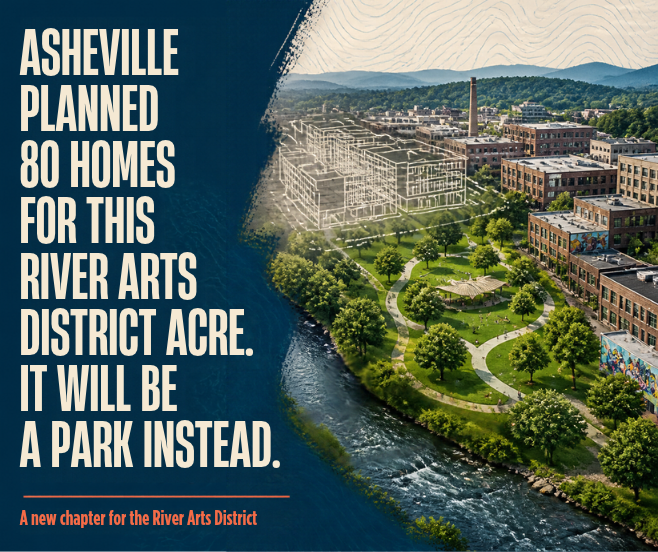
On November 10, Asheville City Council voted on the future of one acre of city land. The land sits at 91 Riverside Drive in the River Arts District. The site is known as the Ice House property. Council authorized a lease with RiverLink, a local nonprofit group. The lease term is 15 years. The rent is one dollar per year.
Under the lease, RiverLink will turn the vacant land into a nature preserve. The plan includes environmental restoration, passive recreation, and public art. The city will keep ownership of the land. RiverLink will pay for improvements and upkeep. The lease must still complete a public notice process, with a 10-day waiting period. The city has not announced an opening date for the preserve.
The site has a long history
The Asheville Ice and Storage Company operated an ice plant on the site in the early 1900s. The brick smokestack from the plant still stands on the land. The city bought the property in 2012 for $625,000. The city removed the old building in February 2013 and kept the smokestack. The land has sat vacant since that time. Factories and warehouses once lined this part of the French Broad River. Most of that industry is now gone.
Housing was the plan for more than a decade
In 2014, the city paid $52,000 for a Riverside Drive redevelopment plan. That plan called for at least 80 homes on this site, as part of a mixed-use project. In 2018, a study led by the Center for Craft and the Asheville Area Chamber of Commerce reviewed sites for creative workforce housing. The study named this site as the most preferred location. The study cost $119,000. No homes were built under either plan. The plans produced reports. The plans did not produce housing.
Three limits control this land
The first limit is water. The site sits in the 100-year floodplain of the French Broad River. The second limit is the soil. A Brownfields Agreement places legal restrictions on the use of the land because of past industrial activity. The third limit is access. Railroad property borders the site.
These limits were in place long before Tropical Storm Helene flooded the River Arts District in 2024. In July 2026, the city asked for proposals that could work inside these limits. RiverLink submitted the highest-scoring proposal. The RiverLink plan removes invasive plants. The plan creates an urban forest and a meadow on part of the site. The plan fits the limits because a park does not place residents in the floodplain.
Why one acre matters to buyers and sellers
Land near downtown Asheville is scarce, and scarce land is one reason home prices stay high. But vacant land is not the same as buildable land. This site appeared in housing plans for 12 years. The site added zero homes in those 12 years. A plan is not supply. Supply is a home that a builder can legally build and a buyer can legally buy.
Our current local numbers show the result. Buncombe County has 2,091 homes for sale, and 1,068 of those homes are in Asheville. The regional median sales price is $410,000. The median has held at that level for three weeks. Months supply of inventory is 6.7 months. New listings in the county totaled 64 last week. Each buildable site that leaves the housing list makes new supply harder to add. Slow new supply keeps pressure on the homes that already exist.
For sellers near the River Arts District, the decision gives a fixed answer for the next 15 years. The neighbor on this acre will be a public park, not a construction site and not 80 new homes competing for the same buyers. For buyers, the lesson is direct. Do not count planned homes as future choices. Count homes with permits. Count homes under construction. Count homes on the market.
A fair reading of the decision
The vote did not remove 80 real homes from the market. Those homes existed only in plans, and the limits on the land made the homes unlikely from the start. The city chose a use that the land can support. The honest cost is different, and the cost is time. Asheville spent 12 years and two studies on housing for a site that the floodplain and the Brownfields Agreement had already ruled out. Buyers and sellers in this market pay for that lost time in a simple way. Homes that are never built cannot hold down the price of homes that are.
Our team tracks land decisions like this one because land decisions set the supply numbers that buyers and sellers will face in future years. Readers who want to know what can be built near a home, or what a nearby vacant parcel is approved for, can ask our team. Clear facts about a parcel are worth more than a rumor about a plan.

